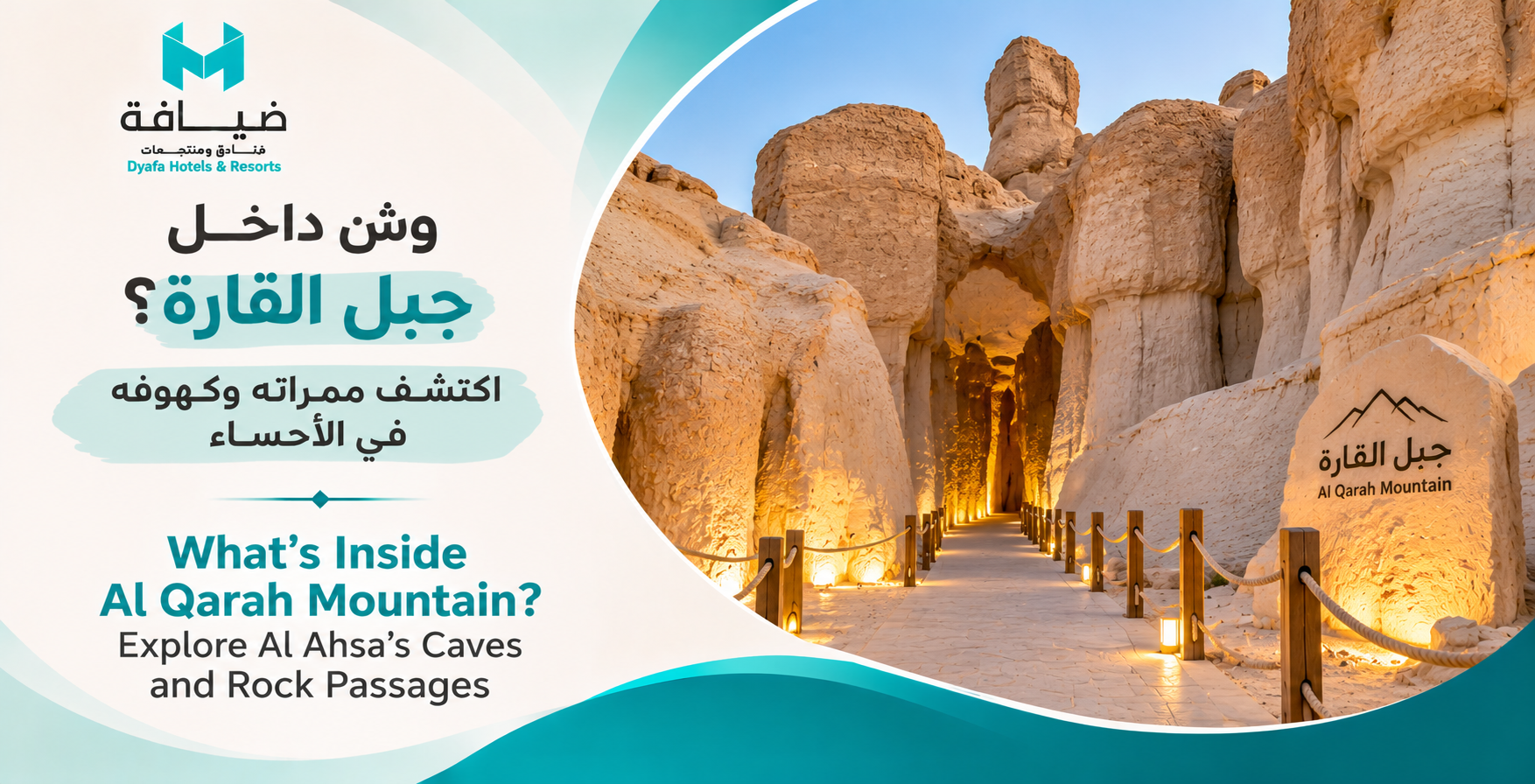

What’s Inside Al Qarah Mountain? Explore Al Ahsa’s Caves and Rock Passages
Discover Al Qarah Mountain in Al-Ahsa, where striking rock formations, shaded passages, and local heritage come together. Explore what makes the mountain distinctive and how to plan your visit.
Rising above the palm groves of Al-Ahsa, Al Qarah Mountain is one of the Eastern Province’s most recognizable natural landmarks. Its weathered exterior gives only a glimpse of the passages and spaces within.
Inside, narrow openings, tall rock walls, and sheltered chambers create a changing landscape of light and shadow. Walking through these spaces offers a different perspective on the oasis and the natural processes that have shaped it.
For visitors interested in geology, photography, or regional heritage, Al Qarah can be a memorable part of an Al-Ahsa itinerary.
How Nature Shaped Al Qarah Mountain
Al Qarah’s distinctive appearance reflects the interaction of rock layers, fractures, and weathering over time.
Differences in the resistance of the layers have contributed to the mountain’s varied surfaces and formations. Openings and fissures create routes through the rock, while erosion has helped shape the spaces visitors see today.
Looking closely at the walls reveals changes in texture, color, and form. These details make the mountain interesting both as a landscape and as a place to learn about geology.
Rock Layers and Natural Fractures
The mountain’s layered structure becomes especially noticeable along its exposed walls.
Some sections appear rough and uneven, while others have smoother surfaces. Vertical fractures interrupt these layers, creating narrow corridors and openings that frame the sky.
A guided explanation or the interpretation available on site can help you understand these features without needing specialist geological knowledge.
Inside the Caves and Passages
Exploring Al Qarah involves moving through a series of rock passages and sheltered spaces, with the experience changing as the walls narrow, widen, or open overhead.
Some areas receive daylight through gaps above, creating patterns that shift with the sun’s position. Others feel more enclosed, drawing attention to the height and texture of the surrounding rock.
Follow the designated visitor route and check which sections are accessible during your visit.
The Cooler Interior
Al Qarah is known for the contrast between its shaded interior and the exposed landscape outside, particularly during hot weather.
Shade, rock mass, and airflow contribute to the conditions within the passages. The temperature you experience will depend on the season, weather, and the area you are exploring.
A light layer may be useful if you prefer extra comfort when moving between different environments.
Magharat Al-Nashab
Magharat Al-Nashab is associated with the mountain’s visitor experience and provides an opportunity to explore its distinctive interior.
Check the current route, entry arrangements, and available interpretation before visiting. If you are traveling with children or someone with mobility needs, ask about surfaces, passage widths, and access requirements.
Other Spaces Within the Mountain
The wider mountain contains different openings and formations, but access may vary.
Explore only the areas open to visitors and avoid entering unmarked passages or climbing beyond the designated route. A local guide can add context to the spaces included in your visit.
Local History and Stories
Al Qarah forms part of a landscape closely connected to the communities of Al-Ahsa.
Its sheltered spaces and prominent position have inspired stories and associations over generations. When hearing local accounts, it is useful to distinguish between documented history and folklore, while appreciating the role both play in the identity of the place.
Conversations with knowledgeable guides can help connect the mountain with the surrounding villages, agricultural life, and local crafts.
Pottery and the Surrounding Communities
Pottery workshops near Al-Qarah offer another way to explore the area’s heritage.
A visit can introduce you to clay preparation, shaping, and finishing, as well as the traditional uses of different vessels. If you would like to watch a demonstration or join an activity, confirm arrangements in advance.
Choosing a handmade piece directly from a workshop adds a personal reminder of the experience.
What to Notice During Your Walk
Take time to observe the details of the passages. The experience becomes more rewarding when you pause to look at the changing light, listen to the sounds, and appreciate the scale of the formations.
Light and Shadow
Sunlight entering through narrow openings can illuminate individual sections of rock while leaving others in shade.
Photographers may enjoy the contrast, but lighting varies throughout the day. Allow time to find compositions along the permitted route rather than expecting a particular effect at a fixed hour.
Sound and Atmosphere
Enclosed passages can change how voices and footsteps sound.
Keeping your voice low allows everyone to enjoy the atmosphere and makes it easier to notice the quieter sounds around you.
Textures and Colors
Look for variations in the rock’s surface, from bands of color to weathered edges and small-scale patterns.
Observe without disturbing the formations, and follow any instructions about touching the walls or approaching restricted sections.
The Visitor Experience
The visitor attraction known as Land of Civilizations adds cultural interpretation to the mountain visit.
Check which exhibitions, activities, and guided experiences are available when planning your trip. Opening hours, admission arrangements, and access to individual areas should be confirmed before departure.
Planning Your Visit
A comfortable visit starts with a realistic schedule and a few practical preparations.
Choosing the Right Time
Plan according to the weather and the amount of time you want to spend outdoors.
During warmer periods, consider scheduling exterior sightseeing for a more comfortable part of the day. Check opening hours before deciding how to divide your time between the mountain and nearby attractions.
Getting to Al-Ahsa
Choose your arrival route according to your starting point, whether traveling by road, rail, or air.
Check current transport schedules and onward travel arrangements before booking. Allow enough time between arrival and any timed activity at the mountain.
Local Transport
Confirm the entrance location and your route before setting out.
A car or arranged transfer can help you combine the mountain with other destinations. If you plan to use an app-based transport service, check availability and arrange your return journey where possible.
What to Bring
Wear comfortable, closed-toe shoes with a suitable grip for walking.
Bring drinking water, clothing appropriate to the weather, and a charged phone. A camera can be useful for the tall passages, but keep equipment manageable so you can move comfortably.
Choosing Accommodation in Al-Ahsa
Staying overnight gives you more flexibility to explore Al Qarah and other parts of the oasis.
When searching for a hotel near me, compare locations in Al Hofuf, Al Mubarraz, and the surrounding area against your full itinerary.
The most convenient property will depend on where you plan to spend your time, along with your preferences for room size, dining, parking, and facilities.
Heritage-Inspired Accommodation
A heritage-inspired stay may appeal to travelers who want their accommodation to complement the cultural focus of the trip.
Review the property’s location and services carefully, ensuring that its style also meets your practical needs.
Modern City Hotels
City hotels can offer convenient access to restaurants, shops, and main roads.
Check travel times to your chosen attractions and confirm details such as breakfast, parking, and check-in arrangements.
Farm and Oasis Stays
Accommodation among the palm groves may suit visitors seeking a quieter setting.
Confirm the exact location, access route, and facilities before booking, especially if you expect to return after dark or leave early in the morning.
Explore More of Al-Ahsa
Al Qarah Mountain can be combined with other experiences that reveal the region’s heritage and natural variety.
Choose a manageable number of stops so you have time to enjoy each place.
Souq Al-Qaisariya
A visit to Souq Al-Qaisariya offers opportunities to browse local products, traditional goods, and gifts.
Take time to speak with sellers and learn about items such as dates, Hassawi rice, fragrances, and textiles.
Ibrahim Palace
Ibrahim Palace adds an architectural and historical dimension to your itinerary.
Check current access arrangements and allow time to appreciate the building and any interpretation available during your visit.
Jawatha
Jawatha provides another opportunity to explore the history of the region.
Confirm the places open to visitors and observe the guidance applicable to religious and heritage sites.
Al Asfar Lake
Al Asfar Lake offers a contrasting landscape of wetlands and surrounding dunes.
Plan it as a separate excursion with suitable transport and local guidance, confirming access conditions before departure.
Discover Al-Ahsa Through Its Rock Passages
Al Qarah Mountain reveals a landscape shaped by time and closely connected to the oasis around it.
Its passages invite you to slow down, notice the light and textures, and explore a different side of the Eastern Province.
Plan your route, confirm visiting arrangements, and leave time for the nearby communities and landmarks. Together, they turn a mountain visit into a richer experience of Al-Ahsa.



© Copyright 2024 Dyafa - All Rights Reserved | Created By Fandaqah Information Technology